
For years, the battle cry of digital marketers was “rank higher.” But in 2026, the landscape has fundamentally shifted. SEO is not dead—it has evolved beyond recognition.
The era of manipulating search engines is over, replaced by an age of E-E-A-T (Experience, Expertise, Authoritativeness, Trustworthiness), AI understanding, and user-first intent. Let’s dive deep into the seismic shift from Old SEO to New SEO and what it means for your online presence.
What is the Difference Between Old SEO and New SEO?
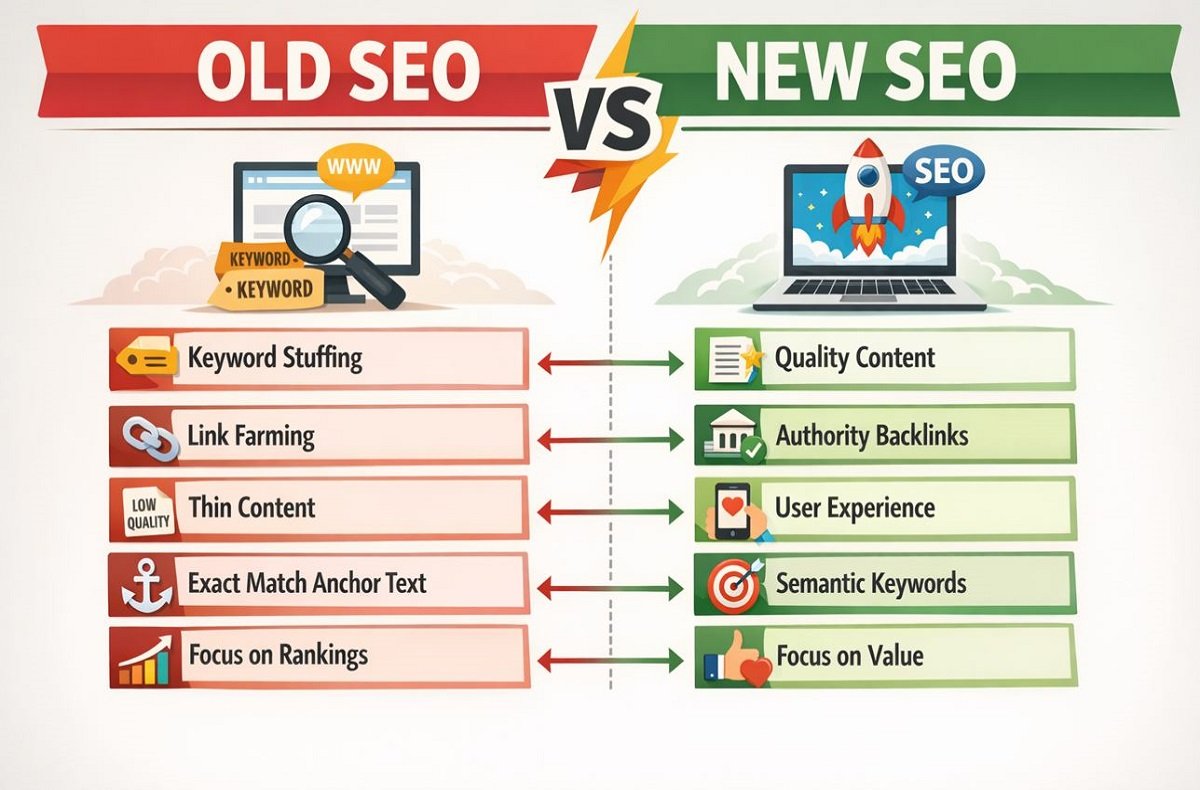
The core difference is a change in philosophy. Old SEO was a technical game played against an algorithm. New SEO is a human (and AI) trust-building exercise played for an audience.
The Old SEO Playbook: A Numbers Game
Traditional SEO, prevalent until the early 2020s, was mechanistic. Success was measured in backlinks, exact-match keywords, and Page 1 dominance. The focus was almost exclusively on Google’s crawlers.
Common Tactics of the Old Regime:
-
Keyword Stuffing: Repeating target phrases unnaturally.
-
Mass Link Building: Prioritizing quantity over quality, often via low-quality directories.
-
Thin Content: Creating shallow pages targeting long-tail queries without real value.
-
Meta Tag Obsession: Treating meta descriptions and title tags as the primary levers.
-
Ignoring User Intent: Ranking for a term like “Apple” without clarifying if the user wanted fruit, tech, or records.
The result?
High traffic, low engagement. Brands saw clicks but not credibility, visitors but not community.
The New SEO Framework | The Age of Context & Trust
New SEO, especially as we move through 2026, is driven by AI-powered search engines (like Google’s Gemini-powered Search Generative Experience) that understand nuance, context, and user satisfaction. The goal isn’t just a ranking—it’s visibility across multiple formats (text, video, AI overviews) and building a trusted digital entity.
Pillars of Modern SEO in 2026:
-
User & AI Clarity: Content must be crystal clear for both humans and AI language models. This means natural language, comprehensive coverage, and clear structure with headers and schema.
-
Answer Visibility: Winning the “zero-click” featured snippet or providing the definitive answer within an AI overview is often more valuable than the #1 blue link.
-
Holistic Entity-First Approach: Google sees your brand as an “entity.” New SEO builds that entity through consistent NAP (Name, Address, Phone), topical authority, brand mentions, and presence across platforms.
-
Experience-Led Content (E-E-A-T): Content demonstrating first-hand experience (“I tested this for 6 months…”) now outranks purely theoretical expertise.
-
Intent Mastery: Creating content clusters that satisfy the full user journey, from informational (“what is…”) to commercial (“best X for…”).
Is SEO still relevant in 2026, or has AI search replaced it?
SEO is more relevant than ever, but its focus has evolved. With the rise of AI-powered search experiences (like Google’s SGE), the goal is no longer just ranking on page one—it’s about securing visibility within AI-generated answers, featured snippets, and multi-format results.
New SEO is about creating content so authoritative and helpful that both AI systems and users trust it as a source. In short, SEO is now “Search Experience Optimization.”
Pros and Cons of Old SEO
Old SEO Pros:
-
Measurable Tactics: Actions like link acquisition were easily quantifiable.
-
Faster Short-Term Gains: For low-competition terms, quick wins were possible.
-
Simpler Framework: The rules, though gameable, were more straightforward.
Old SEO Cons:
-
High Risk: Tactics like Spam link building risked manual penalties.
-
Unsustainable: Algorithm updates (like Panda, Penguin) could wipe out sites overnight.
-
Poor User Alignment: Led to high bounce rates and failed business outcomes.
Pros and Cons of New SEO
New SEO Pros
-
Sustainable & Resilient: Building authority and trust future-proofs your site against updates.
-
Better Business Results: Aligns with actual user needs, driving higher conversion and loyalty.
-
Multi-Format Visibility: Optimized content can appear in featured snippets, video carousels, and AI conversations.
New SEO Cons
-
Requires More Investment: Demands quality content creation, technical excellence, and brand building.
-
Slower Initial Results: Building trust doesn’t happen overnight.
-
Complex & Evolving: Requires continuous learning as AI and search evolve.
What’s the Difference in 2026? The AI and Experience Inflection Point
The key differences in 2026 are crystallized by two forces: Advanced AI Integration and the “Experience” in E-E-A-T.
-
Conversational Queries are Default: SEO now optimizes for full questions, not keywords. People ask search engines complex questions conversationally, and your content must provide a natural, complete answer.
-
Content Depth Over Keyword Density: A single, comprehensive, and experiential “pillar page” will outperform dozens of shallow, keyword-targeted pages.
-
Brand is a Ranking Factor: A strong, recognizable brand with positive sentiment and off-site mentions is a powerful trust signal that AI systems recognize.
-
Technical SEO is Table Stakes: Core Web Vitals, mobile-first indexing, and site structure are no longer differentiators—they are the basic entry ticket. Failure here means you won’t even be considered.
Facilities of SEO: The Modern Toolkit
Modern SEO success is built on integrated facilities:
-
Content Intelligence Tools: For understanding topical gaps and user intent.
-
Technical Auditors: To ensure site health meets core web vitals and crawling standards.
-
AI-Assisted Writing Aids: Used for research, structuring, and clarity checks—not for mass content generation without human expertise.
-
Brand Monitoring Software: To track mentions, sentiment, and entity strength.
What’s the main difference between Old SEO and New SEO strategies?
The main difference is intent and audience. Old SEO targeted search engine crawlers with tactics like keyword stuffing and link quantity. New SEO targets human users and AI understanding by providing comprehensive, context-rich answers that demonstrate E-E-A-T (Experience, Expertise, Authoritativeness, Trustworthiness). Success is measured by satisfaction and trust, not just traffic.
Did old SEO tactics like keyword stuffing and buying links ever work?
Yes—these tactics could produce short-term ranking boosts. However, they were always high-risk and against search engine guidelines. Post-2020, with major algorithm updates like Google’s Helpful Content Update and core ranking shifts, these tactics are not only ineffective but actively harmful. They can lead to manual penalties, loss of rankings, and irreparable damage to your site’s reputation in the eyes of the algorithm.
What are the most important ranking factors in New SEO for 2026?
While Google keeps its exact algorithm private, observable trends point to these critical 2026 SEO ranking factors:
-
User Experience (UX) & Core Web Vitals: Page speed, mobile responsiveness, and lack of intrusive interstitials.
-
Content Depth & Helpfulness: Content must fully satisfy search intent with a unique experience or expertise.
-
Entity & Brand Authority: Your brand’s overall presence, reputation, and mentions across the web.
-
Contextual Understanding: How well your content relates to broader topics and answers related questions a user might have.
-
Secure & Technical Foundation: HTTPS, clean site architecture, and structured data (schema markup).
How does AI-generated content fit into New SEO?
AI is a tool, not a strategy. Using AI for brainstorming, structuring, or editing can be efficient. However, publishing raw, unedited AI content without human expertise, experience, or editorial oversight is a significant risk. Search engines prioritize content with demonstrable human experience and authority. The best practice is “AI-assisted, human-empowered” creation—leveraging technology while ensuring the final output offers unique value and perspective only a human can provide.
I have an older website built with Old SEO tactics. How do I transition to New SEO?
Transitioning is a process of auditing and upgrading:
-
Content Audit: Identify and rewrite or remove thin, keyword-stuffed content. Update old posts with current information and deeper insights.
-
Technical Cleanup: Disavow toxic backlinks, improve page speed, and ensure mobile-friendliness.
-
Shift Your Focus: Start creating new content aimed at answering user questions completely, showcasing your expertise, and building topical authority.
-
Monitor Brand Signals: Encourage genuine reviews, engage on social platforms, and seek mentions from reputable industry sources.
This transition prioritizes long-term resilience over short-term traffic spikes.
How do I measure success in New SEO if not just by rankings?
Modern SEO success uses a broader set of SEO performance metrics:
-
Visibility Metrics: Impressions in Search Generative Experience (SGE), featured snippet ownership, and local pack inclusion.
-
Engagement Metrics: Click-through rate (CTR), dwell time, pages per session, and returning visitors.
-
Business Metrics: Conversion rate, lead quality, and customer lifetime value attributed to organic search.
-
Authority Metrics: Growth in branded search queries, organic backlinks from reputable sites, and share of voice in your industry.
Is local SEO considered part of Old SEO or New SEO?
A: Local SEO is a vital component of New SEO and has become more sophisticated. It’s no longer just about citations. Modern local SEO integrates:
-
Google Business Profile Optimization: With AI-powered Q&A and attributes.
-
Localized Content & Community Engagement: Demonstrating deep local knowledge and involvement.
-
Reviews & Sentiment: Managing and responding to reviews is a direct trust signal.
-
“Near Me” and Voice Search Optimization: For conversational queries.
Success in local search hinges on authenticity and relevance, core tenets of the New SEO framework.
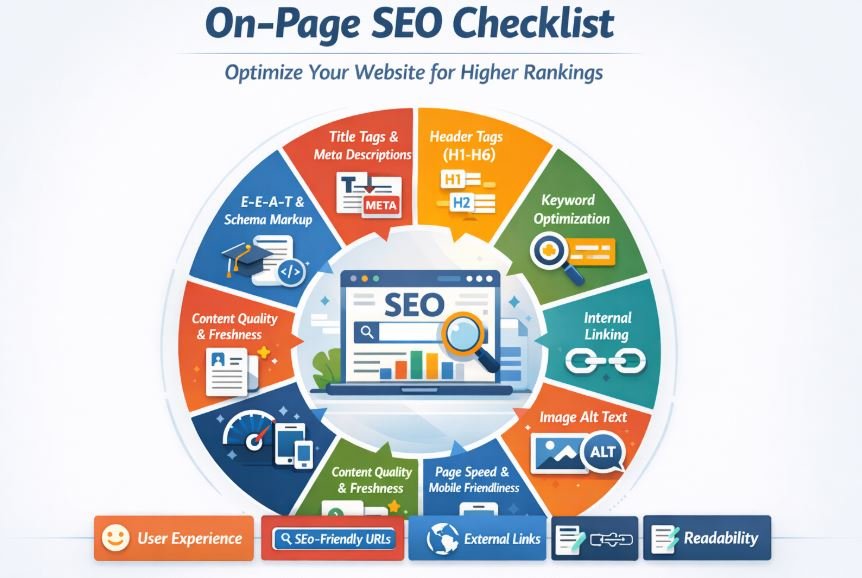
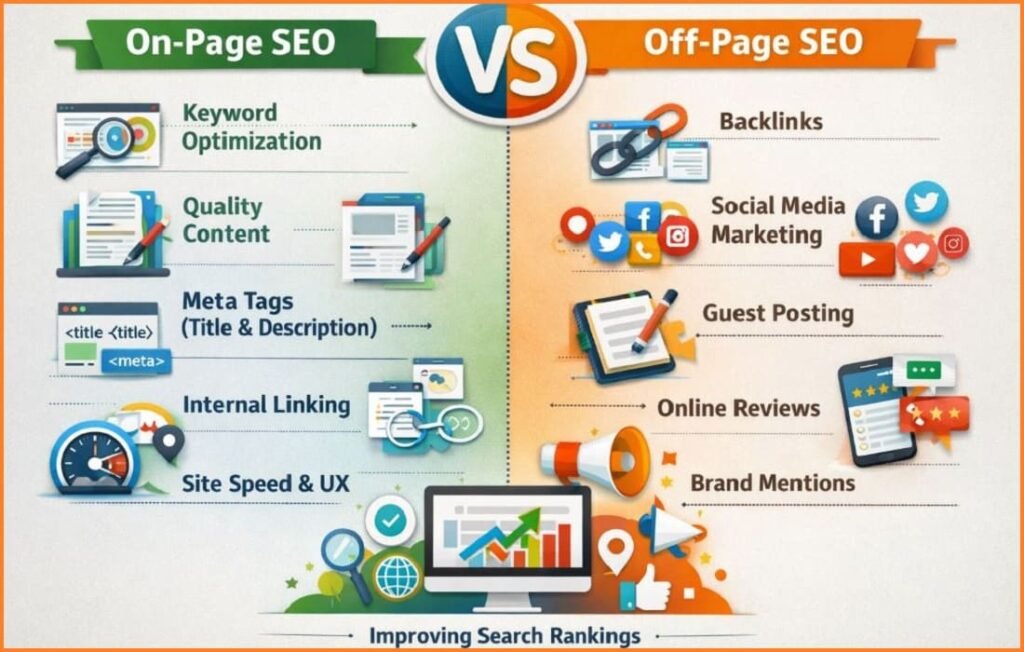
If you maintain a business or service-related website, then you need to know the On-Page SEO Checklist in 2026 for improving on-page SEO Structure.
Conclusion: The Future Belongs to the Helpful
Old SEO was about being found. New SEO in 2026 is about being chosen and trusted.
The transition is from marketer to mentor, from optimizer to authority. The winning strategy is no longer about deciphering a secret algorithm code, but about demonstrating undeniable human expertise and value.
SEO is not dead—confusing, manipulative, and user-hostile SEO is. The path forward is clear: create content with depth, clarity, and real-world experience. Build a brand people recognize and trust. Solve problems completely. When you do this, you align with both the user’s deepest needs and the AI’s fundamental goal: to surface the most helpful, reliable information available. That’s the only ranking that truly matters now.