Search Engine Optimization (SEO) is the backbone of online visibility. If you want your website to rank higher on Google, attract organic traffic, and build long-term authority, you must understand the two core pillars of SEO: On Page SEO and Off Page SEO.
Many beginners ask:
What is the difference between On Page SEO and Off Page SEO?
Which one matters more?
And how do they work together?
In this complete guide, we’ll break down On-Page SEO vs Off-Page SEO in simple language, explain their features, differences, and benefits, and help you decide how to use both effectively in 2026.
What Is On-Page SEO? (On-Page SEO Overview)
Definition of On-Page SEO
On-page SEO refers to all the optimization techniques you apply directly on your website to improve its search engine rankings. These optimizations help Google understand what your content is about and how useful it is for users.
In simple terms, on-page SEO focuses on content quality, relevance, and user experience.
Core Elements of On-Page SEO
To understand on page optimization vs off page optimization, you must first know what falls under on-page SEO.
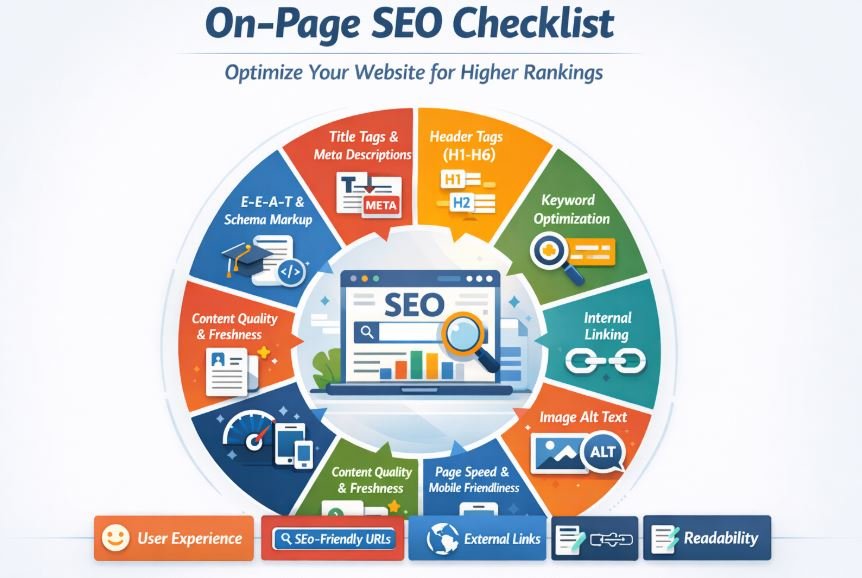
1. High-Quality Content
-
Content must be original, helpful, and accurate
-
Written for users, not just search engines
-
Covers the topic in depth to match search intent
2. Keyword Optimization
-
Use the focus keyword naturally
-
Place keywords in headings, subheadings, and body text
-
Avoid keyword stuffing
3. Title Tags & Meta Descriptions
-
SEO-friendly titles improve click-through rates
-
Meta descriptions help users understand page value
4. Header Tags (H1–H6)
-
Proper structure improves readability
-
Helps search engines understand content hierarchy
5. URL Structure
-
Clean, short, and descriptive URLs
-
Avoid unnecessary numbers or symbols
6. Internal Linking
-
Connect related pages within your site
-
Improves crawlability and user navigation
7. Image Optimization
-
Use compressed images
-
Add descriptive ALT text for accessibility and SEO
8. Page Speed & Core Web Vitals
-
Faster pages rank better
-
Improves user experience
9. Mobile Optimization
-
Mobile-first indexing is a ranking factor
-
Responsive design is essential
Features of On-Page SEO
-
Full control over optimization
-
Immediate impact on rankings
-
Improves user experience
-
Forms the foundation of SEO success
-
Ideal for beginners
What’s the differences between On Page SEO VS Off Page SEO?
When comparing on page vs off page, on-page SEO is always the starting point.
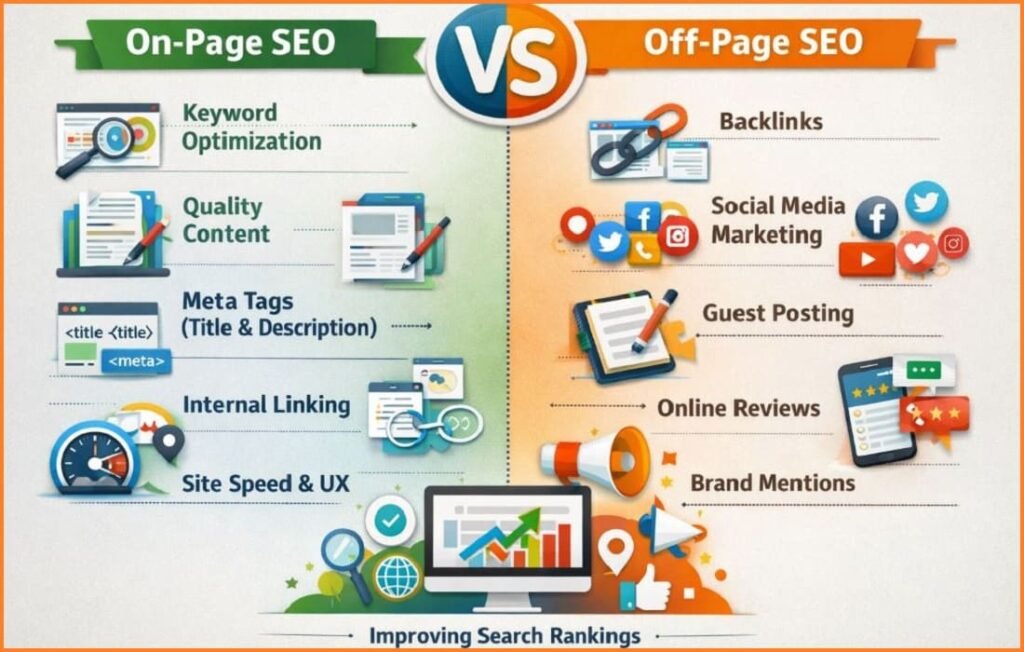
| SEO Type | Key Components | Purpose / Benefits | SEO Tip |
|---|---|---|---|
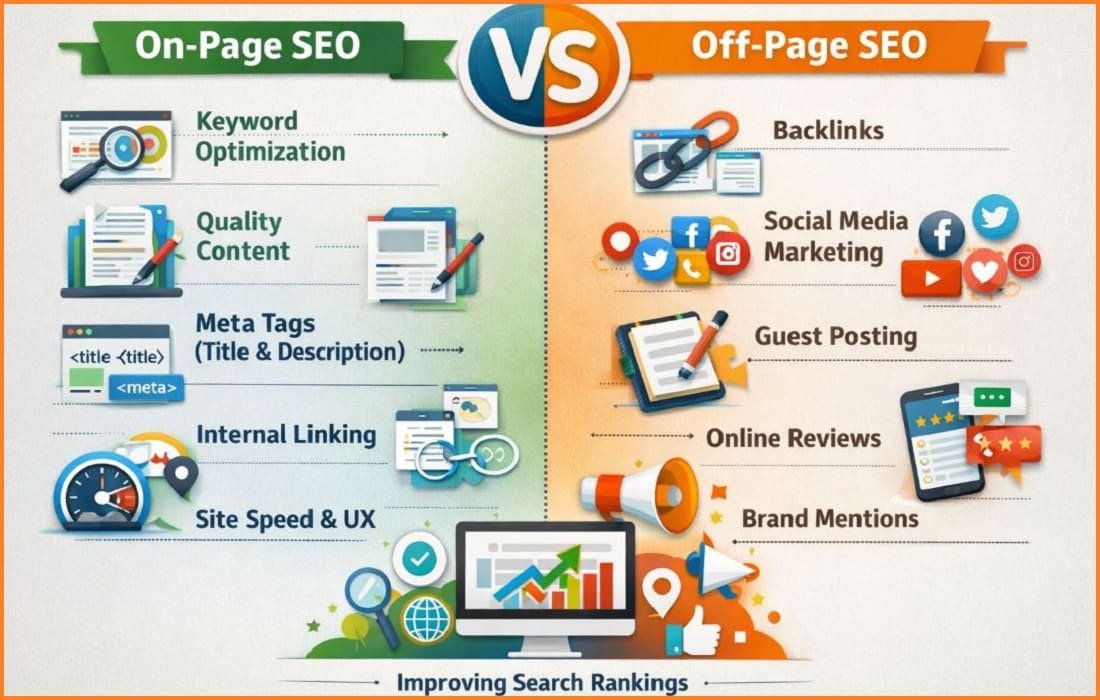
| On-Page SEO | Keyword Optimization, Meta Tags (Title & Description), Quality Content, Internal Linking, Site Speed & UX | Helps search engines understand your content, improves relevance, and boosts user experience | Use long-tail keywords naturally, optimize headings (H1, H2), and ensure fast loading speed |
| Off-Page SEO | Backlinks, Social Media Marketing, Guest Posting, Online Reviews, Brand Mentions | Builds website authority, trustworthiness, and improves ranking signals externally | Focus on high-quality backlinks, engage actively on social media, encourage positive reviews |
| Goal | Optimizing content and website structure internally | Improves visibility and relevance in search engines | Always combine with off-page strategies for maximum SEO impact |
| Goal | Enhancing online authority and credibility externally | Strengthens brand reputation and referral traffic | Monitor backlinks and social mentions regularly to maintain quality |
What Is Off-Page SEO? (Off-Page SEO Overview)
Definition of Off-Page SEO
Off-page SEO refers to all SEO activities performed outside your website to improve its authority, trust, and reputation in search engines.
While on-page SEO focuses on relevance, off-page SEO focuses on credibility and authority.
Core Elements of Off-Page SEO
1. Backlinks (Link Building)
-
High-quality links from authoritative websites
-
Act as “votes of trust” for Google
2. Brand Mentions
-
Linked and unlinked mentions increase trust
-
Helps Google recognize brand authority
3. Social Signals
-
Content shares, engagement, and visibility
-
Indirect ranking influence
4. Guest Posting
-
Publishing content on relevant websites
-
Builds backlinks and brand exposure
5. Influencer Outreach
-
Promotes content through trusted voices
6. Online Reviews
-
Crucial for local SEO and trust
-
Impacts user decisions
Features of Off-Page SEO
-
Builds long-term authority
-
Improves domain trust
-
Harder to control
-
Results take time
-
High impact for competitive keywords
This is a major difference between On Page SEO and Off Page SEO.
On Page SEO vs Off Page SEO: Key Differences Explained
1. Control & Ownership
-
On-page SEO: Fully controllable
-
Off-page SEO: Depends on external websites
2. Ranking Focus
-
On-page SEO improves relevance
-
Off-page SEO improves authority
3. Speed of Results
-
On-page SEO shows faster improvements
-
Off-page SEO delivers long-term growth
4. Cost & Effort
-
On-page requires content and technical work
-
Off-page requires outreach and relationship building
5. Risk Factor
-
On-page SEO is safer
-
Off-page SEO carries risk if spammy links are used
This clearly explains the difference between On Page SEO and Off Page SEO.
Old SEO vs New SEO – What’s the Difference and how modern SEO strategies have evolved to rank better in Google today.
On Page SEO vs Off Page SEO: Which Is More Important in 2026?
In 2026, Google prioritizes helpful content, user experience, and trust.
-
Without strong on-page SEO, off-page SEO won’t work effectively
-
Without off-page SEO, competitive rankings are hard to maintain
Verdict:
On-page SEO is the foundation, and off-page SEO is the amplifier.
You need both.
On Page vs Off Page SEO: Conceptual Comparison
-
On-page SEO answers “What is this page about?”
-
Off-page SEO answers “Can this page be trusted?”
On-page optimization vs off page optimization is not a competition—it’s a partnership.
How On Page SEO and Off Page SEO Work Together?
-
Optimized content attracts backlinks naturally
-
Strong backlinks improve content visibility
-
Internal linking boosts authority flow
-
Brand trust improves engagement
A balanced approach ensures sustainable rankings.
Common Mistakes in On-Page and Off-Page SEO
On-Page SEO Mistakes
-
Keyword stuffing
-
Thin or duplicated content
-
Poor internal linking
-
Ignoring page speed
Off-Page SEO Mistakes
-
Buying low-quality backlinks
-
Over-optimized anchor text
-
Irrelevant guest posting
-
Ignoring brand building
Best Practices for On Page and Off Page SEO in 2026
-
Focus on helpful, people-first content
-
Build topical authority
-
Earn links naturally
-
Optimize for UX and Core Web Vitals
-
Strengthen E-E-A-T signals
FAQs on On Page SEO vs Off Page SEO
What is the difference between on page SEO and off page SEO?
On-page SEO focuses on website content and structure, while off-page SEO focuses on external authority signals like backlinks.
Is on-page SEO more important than off-page SEO?
On-page SEO is more important initially, but off-page SEO is essential for long-term growth.
Can I rank with only on-page SEO?
Yes, for low-competition keywords. For competitive niches, off-page SEO is required.
How long does off-page SEO take to work?
Typically 3–6 months, depending on competition and link quality.
What should beginners focus on first?
Beginners should always start with on-page SEO.
Final Verdict
To succeed in Google rankings, you must master both On Page SEO and Off Page SEO.
-
On-page SEO builds relevance and usability
-
Off-page SEO builds trust and authority
The smartest SEO strategy in 2026 is balance.
Start with strong on-page optimization, then scale with ethical off-page SEO.